Who benefits from PortMiami’s cruise economy?
A 2023 study tracks ship suppliers and visitor spending, while a 2026 passenger milestone highlights the limits of older impact estimates.
Key Takeaways
- •A 2023 model estimated 45,309 cruise-related direct, indirect and induced jobs, including 21,689 direct jobs.
- •PortMiami passed 10 million passenger movements in September 2026 before its fiscal year ended.
- •The port lists permits for suppliers and says three ships can connect to shore power at once.
PortMiami's cruise economy reaches far beyond the terminal gates, but a passenger milestone alone cannot tell local businesses how much of that activity they capture. A county-commissioned study maps a 2023 economy of ship suppliers, visitor services and spending by workers, with important limits on what it can say about today.
PortMiami said it reached 10 million cruise passenger movements on Sept. 14, 2026, with two weeks remaining in its fiscal year. That is a milestone recorded before the year ended, not a final fiscal 2026 total. Passenger movements also should not be treated as a count of distinct visitors or as a direct measure of local spending.
A study prepared for PortMiami by Martin Associates estimated that cruise operations supported 45,309 direct, indirect and induced jobs in calendar 2023, including 21,689 direct jobs. It estimated $10.052 billion in statewide economic activity from those operations. The model describes an earlier year and its assumptions; it does not measure current employment or prove that the 2026 passenger milestone produced a proportional increase.
Where the business activity occurs
22Miami previously reported the 10 million passenger milestone and the port's cruise-season terminal access plan, two measures of the volume and logistics behind the business activity.
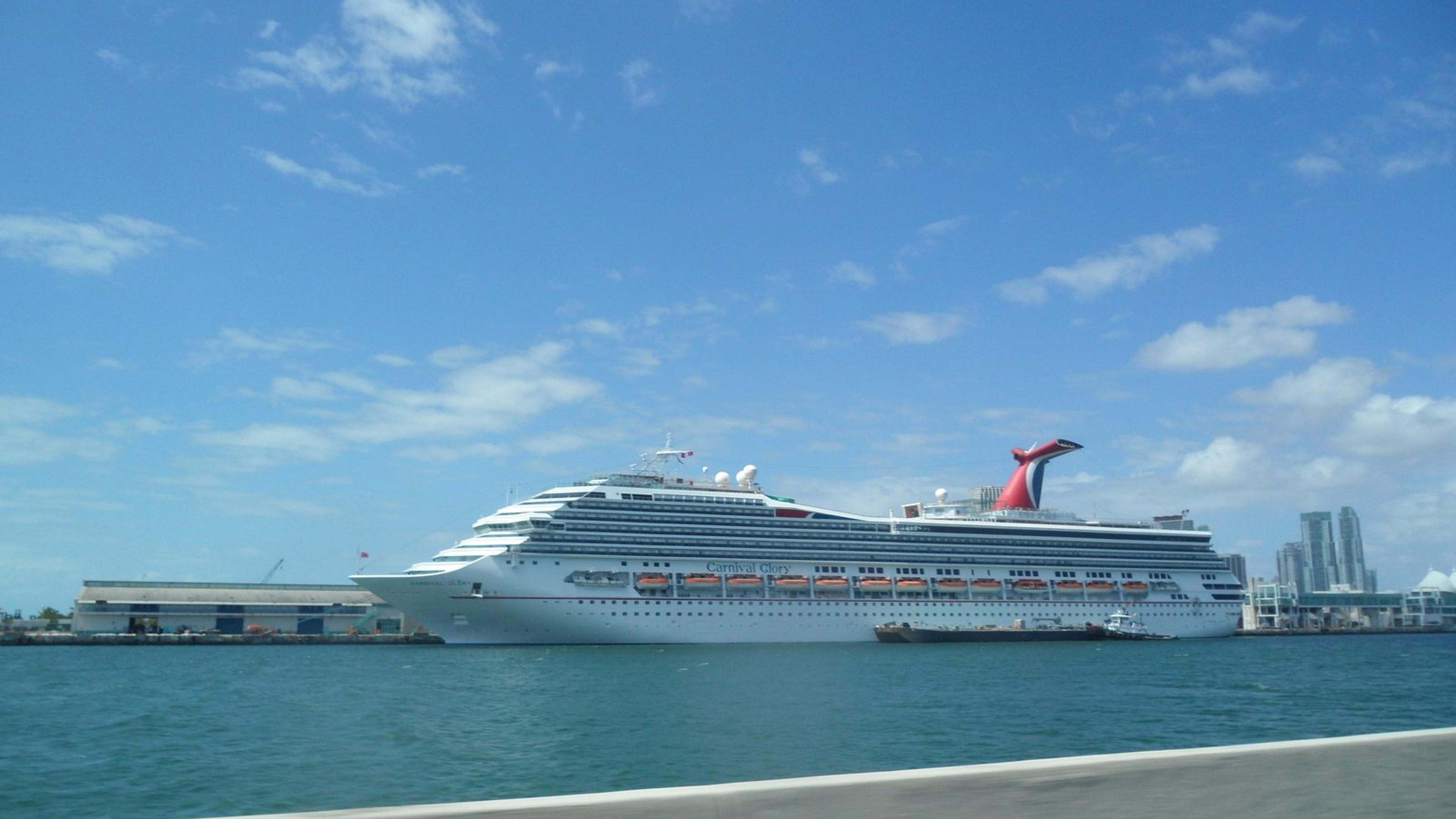
A homeported cruise ship takes on passengers and supplies at PortMiami. Martin Associates distinguishes that call from an intermediate stop, which typically does not embark or disembark passengers and generally does not buy the same range of local supplies and services. For a Miami business, the difference is the opportunity to serve both a vessel preparing for a voyage and travelers arriving or departing.
The study identifies ship chandlers, pilots, longshore workers, line handlers, caterers, linen companies, security providers, waste contractors and local transportation among the businesses directly connected to vessel operations. It also includes hotels, restaurants, taxis, tour providers and regional airport services linked to passengers.
The consultant estimated that cruise vessels purchased more than $450 million in food and beverages from area vendors in 2023. It also reported nearly $20 million in local linen purchases and about $5 million for solid-waste and refuse services. Those are study estimates for 2023, not a current directory of contracts or a promise that spending is evenly distributed among local firms.
Some supplies do not originate locally. The study notes that nonperishable food and retail items can be purchased under contracts and trucked in from outside the area. A ship at a Miami berth therefore creates opportunities for local vendors without guaranteeing that every item loaded aboard was bought from a Miami-Dade company.
Travelers create another channel. The study's 2023 passenger survey estimated that 38% to 46% of nonresident passengers would spend a night before or after a cruise in a hotel or paid lodging, depending on the passenger group examined. The survey is a snapshot from that period; it does not establish today's hotel-stay rate.
How to read the jobs number
The 45,309 estimate combines three categories. Direct jobs are associated with businesses serving cruise vessels and passengers. Indirect jobs are supported by purchases those firms make from suppliers. Induced jobs are associated with spending by directly employed workers in the surrounding economy.
Martin Associates estimated 9,969 indirect and 13,651 induced jobs alongside the 21,689 direct positions. The report uses firm interviews, passenger and crew surveys, expenditure patterns and economic coefficients to estimate those links. It says approximately 500 area firms were interviewed for the broader port study, while 1,100 passengers and 220 crew members were surveyed in December 2023.
Those categories describe economic connections, not 45,309 PortMiami employees. Nor are the estimates a headcount of jobs added because of the September 2026 milestone. The study includes modeled effects of local purchasing and worker spending, so readers should keep its year, geography and method attached to the figure.
The same caution applies to the $10.052 billion estimate. The study's statewide total combines approximately $7.972 billion in business services revenue with $2.080 billion in re-spending and consumption. It is a measure of economic activity in the model, not port profit, tax revenue or a sum of cruise ticket sales. The study says ticket value is excluded from its revenue impact.
Access has a cost
For a company hoping to sell services at the port, demand is only part of the question. PortMiami's business permit page lists requirements and a fee schedule for categories including ship chandlers and suppliers, ground transportation, waste management and maintenance.
The published schedule lists a $1,400 permit fee for a ship chandler or supplier and a $400 nonrefundable initial processing fee for most applicants. A listed fee is not evidence of a contract award or of every cost a business will face. Applicants should check the current rules, insurance requirements and category directly with the port before making a commercial commitment.
Public infrastructure matters as well
PortMiami says five cruise berths have shore-power capability and that three ships can safely connect at the same time. Shore power allows a compatible vessel to use land-based electricity while docked; the port's published capacity is not a record of how often ships actually plug in.
The county's FY 2025–26 adopted capital plan lists a $177.195 million shore-power program and $3.68 million in its FY 2025–26 expenditure schedule. Those are budgeted program figures. They do not independently establish actual spending, electricity use or verified emissions savings.
The port's separate shore-power page describes an estimated $125 million program cost. The documents do not explain in the cited passages whether the two figures have identical scopes, so they should not be substituted for each other or treated as proof of an overrun.
Public budgets, vessel connections and private contracts answer different questions: what the county planned to fund, what infrastructure is available, and what activity companies actually undertake.
The September passenger milestone shows the scale of PortMiami's cruise operations before the fiscal year closed. The 2023 study shows where spending and modeled employment were associated with an earlier set of voyages. A current final passenger total, updated business data and observed shore-power use would be needed to quantify how those relationships have changed.