What Amendment 3 Would Change for Miami-Dade Taxpayers and Local Budgets
The proposed homestead expansion would reduce local tax collections unevenly. State forecasts, county estimates and household savings describe different parts of that change, with voters set to decide on November 3, 2026.
Key Takeaways
- •State economists estimate $945.7 million less non-school property-tax revenue across Miami-Dade local governments in FY2028-29, assuming the measure passes.
- •The county’s separate forecast is $696.7 million for four county operating funds, with Jackson Health System listed separately. These figures cannot be added to the state total.
- •A larger exemption does not eliminate school taxes or association assessments. Non-homestead owners face a different assessment-cap change and uncertain future millage decisions.
A homestead tax cut can mean a smaller bill for one owner and a difficult budget decision for the government serving that property. Amendment 3 puts those two accounts together across Miami-Dade, where the mix of primary residences, rentals, businesses and second homes varies sharply from one city to the next.
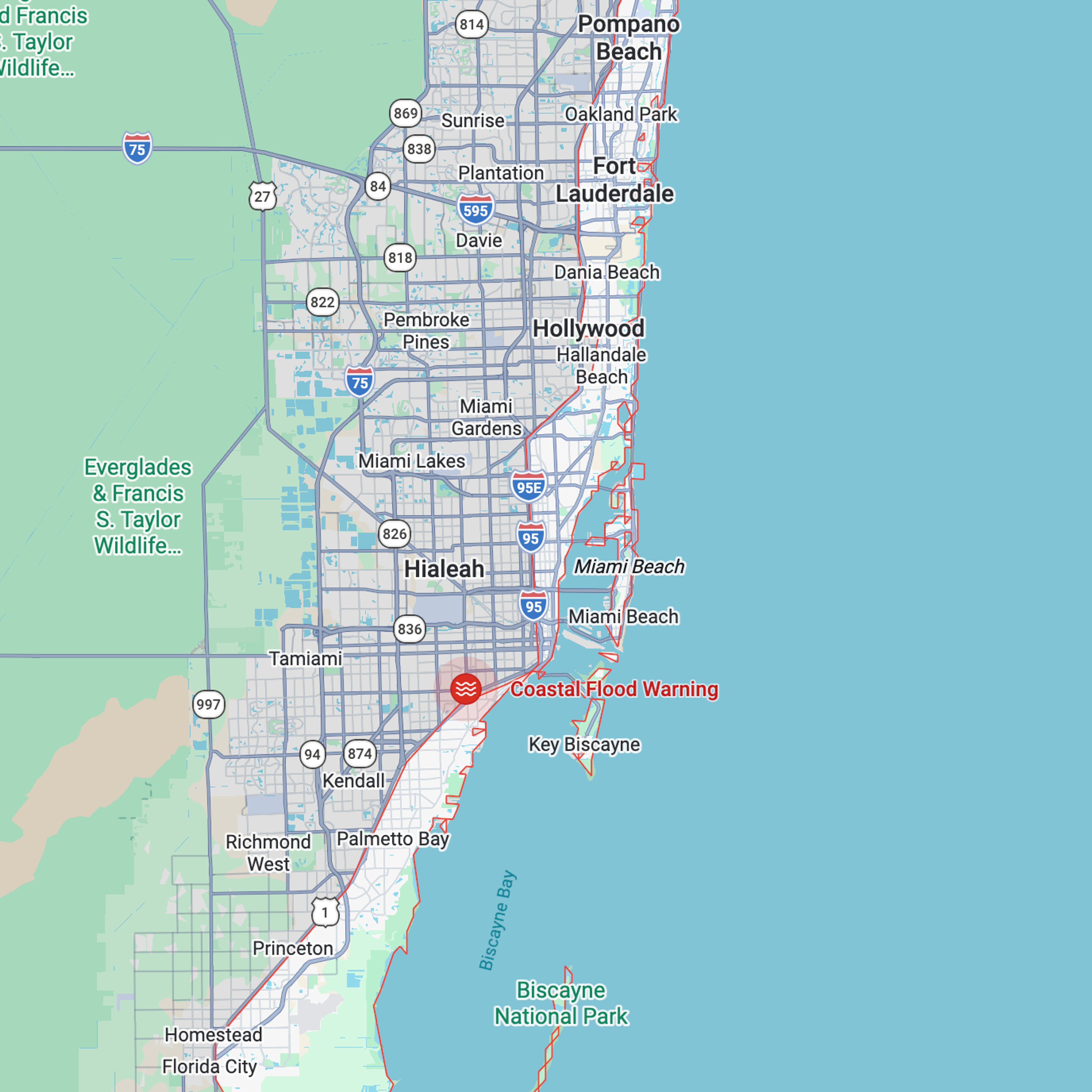
The state Revenue Estimating Conference projects $524.7 million less annual non-school property-tax revenue across local governments in Miami-Dade in fiscal 2027-28 and $945.7 million less in fiscal 2028-29 if the measure passes. Those are modeled reductions from a baseline, not money already removed from an adopted budget or a forecast of specific service closures.
The household benefit is also conditional. It depends on eligibility, assessed value, the taxing authorities on the bill and their future rates. A countywide median can illustrate the scale of an exemption, but it cannot serve as a tax quote for a particular home.
The exemption and the tax rate are different levers
The Legislature’s CS/HJR 1F proposes a non-school homestead exemption covering the first $150,000 of assessed value in 2027 and $250,000 from 2028, followed by inflation adjustments. School-district taxes retain their separate treatment. The proposal also lowers the annual non-homestead assessment-growth limit from 10% to 5%, sets permitted uses for county and municipal property-tax revenue, and directs the Legislature to establish a process for further local homestead exemptions.
The proposal needs at least 60% approval on the November 3 ballot and would take effect January 1, 2027 if adopted. It is not an across-the-board repeal of every property tax.
An exemption reduces taxable value. Millage determines the rate applied to that value. The amendment does not promise that local governments will keep millage unchanged, and a lower taxable base does not by itself determine the final bill. Non-ad valorem charges, such as separately imposed service assessments, are another part of an owner’s costs.
The practical distinction matters for condo owners in particular. Their property-tax bill and their association’s assessments arise from different obligations. A tax saving may help an owner’s cash flow without changing what the association must collect for repairs, insurance or reserves.
Read the state and county estimates separately
The state’s July 10 model covers local non-school taxing governments throughout Miami-Dade. Its jurisdiction tables separate county government, municipalities and independent special districts. The county’s proposed-budget executive summary addresses its own funds and provides a separate estimate for Jackson Health System.
The dated estimates below use different scopes.
State estimate for all local non-school governments in Miami-Dade: FY2027-28 $524.7m; FY2028-29 $945.7m.
County estimate for four operating funds: FY2027-28 $385.5m; FY2028-29 $696.7m.
County estimate for Jackson Health System, separately listed: FY2027-28 $34.7m; FY2028-29 $63.9m.
The state total overlaps county activity and must not be added to the County estimates.
The estimates use different baselines and scopes. In the state’s jurisdiction table, the county-government line is $643.5 million in fiscal 2028-29; the county’s own four-fund estimate is $696.7 million. The difference is a reason to keep the source and fiscal year attached, rather than choose one as the sole countywide number.
A current County Amendment 3 information page separately gives an approximate $385.8 million reduction for the budget year beginning October 2027 and $696.7 million after full phase-in. The FY2026-27 proposed budget had estimated $385.5 million for FY2027-28 across four county operating funds. These are different dated estimates with different scopes, and neither should be added to the state’s all-government total.
Adding the county estimate to the all-government state estimate would double-count overlapping activity. Adding projected annual losses across successive years and calling the result a permanent annual loss would create another error. A recurring estimate describes an annual effect at a specified point in the forecast, not a separate one-time charge.
The tables are useful because they make the counterfactual visible: revenue expected under existing rules compared with revenue under the proposal. They do not determine what officials would subsequently do about the gap. Higher rates, changed spending, fees or other funding would require their own decisions and legal authority.
The same amendment reaches different local tax bases
The state’s jurisdiction table shows substantially different dollar effects across Miami-Dade municipalities. A larger city can face a larger absolute loss while a smaller city faces a more difficult adjustment relative to its resources.
Selected municipality projections are annual revenue reductions, not total-budget cuts; municipal entries may include dependent districts.
Miami: FY2028-29 reduction $72.3m; FY2031-32 reduction $124.4m.
Hialeah: FY2028-29 reduction $29.9m; FY2031-32 reduction $44.5m.
Miami Beach: FY2028-29 reduction $22.5m; FY2031-32 reduction $41.5m.
Miami Gardens: FY2028-29 reduction $20.0m; FY2031-32 reduction $28.0m.
Coral Gables: FY2028-29 reduction $15.0m; FY2031-32 reduction $22.9m.
Homestead: FY2028-29 reduction $11.6m; FY2031-32 reduction $15.2m.
North Miami: FY2028-29 reduction $8.3m; FY2031-32 reduction $12.3m.
Doral: FY2028-29 reduction $5.9m; FY2031-32 reduction $10.0m.
Miami Shores: FY2028-29 reduction $4.5m; FY2031-32 reduction $5.7m.
Miami Springs: FY2028-29 reduction $4.1m; FY2031-32 reduction $5.4m.
Key Biscayne: FY2028-29 reduction $2.0m; FY2031-32 reduction $3.1m.
Sunny Isles Beach: FY2028-29 reduction $1.7m; FY2031-32 reduction $2.9m.
Bal Harbour: FY2028-29 reduction $0.6m; FY2031-32 reduction $1.4m.
Miami Beach has also provided a separate city estimate. In an Oct. 26 email to 22Miami, Melissa Berthier, the city’s marketing and communications director, said the attached estimate projects a cumulative $9.8 million reduction: $5.5 million in 2027 and an additional $4.3 million in 2028. The estimate concerns the homestead exemption and excludes the proposed change to the non-homestead assessment-growth cap. The same attachment says lowering that cap from 10% to 5% could slow growth in the City’s property-tax base by up to $15 million per year.
These are city projections, not realized losses. The cumulative homestead estimate and the separate annual cap estimate cover different components and periods. They should not be added together or treated as directly comparable with the state’s annual Miami Beach projections without reconciling their fiscal periods, levy coverage and assumptions.
These figures are reductions in projected revenue, not cuts to total city budgets. The municipal entries can include dependent districts. They should not be divided casually by a city-only operating levy and described as the percentage of its future budget that disappears.
Comparing a fiscal 2028-29 loss with a proposed 2026 operating levy would mix years. Comparing a municipal entry that includes dependent districts with a city-only levy could also mix jurisdictions. The absolute state estimates permit a more consistent comparison while city finance offices assess their own funds.
Differences in property ownership help explain why local exposure deserves separate examination. A city with many homesteaded residences has a different tax base from one with extensive commercial property or second homes. But establishing the size of the effect requires parcel and levy data, not a label such as coastal, suburban or condo-heavy alone.
A median assessed value is context rather than a household bill
The Property Appraiser’s July 1 preliminary report places Miami-Dade’s median homestead assessed value at $245,068. Its median just value, a market-value measure, is $459,837. These are separate distributions; the report does not identify a single typical home having every reported median.
Assessed value can differ substantially from market value because of assessment limits and a property’s history. A recently purchased home and a long-held home with similar market values can therefore enter an exemption calculation from different starting points.
The proposed $250,000 exemption is close to the reported median assessed value. That helps explain why the measure could be meaningful for many qualifying owners. It does not establish that half the county’s owners would owe no non-school tax in 2028. Values can change, eligibility varies and each bill contains its own taxing jurisdictions.
A neighborhood savings illustration should not become a personalized forecast, especially where district coverage or other exemptions are uncertain. A defensible individual comparison starts with the actual parcel’s assessment, exemptions and tax lines. It should also distinguish current proposed rates from the rates ultimately applied to the bill.
Most condominium parcels have no homestead exemption
The preliminary roll lists 395,070 condominium parcels, including 146,423 with homestead exemptions. That is 37.1%, leaving 248,647 without one. This is a parcel count, not a count of unique owners or a survey of why each unit lacks an exemption.
The larger homestead exemption would not automatically extend to that non-homesteaded group. The proposed 5% non-homestead assessment-growth limit is a separate provision. Its value to an owner depends on the relationship between assessed and just value, the parcel’s history, applicable exclusions and changes in tax rates.
It is therefore inaccurate to use the countywide 4.1% increase in condominium taxable value as proof that few owners would benefit. That aggregate includes new construction and changes across many parcels. An individual assessment can behave differently from the countywide total.
Renters do not receive an owner’s homestead exemption directly. Whether changes in a landlord’s costs affect rent would depend on the property, the lease and market conditions. Neither the revenue tables nor the exemption schedule establishes a rent reduction or increase.
Residency and implementation remain consequential
The House analysis describes different treatment for owners who were not permanent Florida residents on December 31, 2026, with a smaller initial exemption before access to the full schedule. That makes eligibility and the administration of residency evidence important parts of implementation.
A renter who later buys a home raises a different question from an owner who first becomes a Florida resident after the cutoff. The relevant inquiry is how the enacted constitutional language and implementing rules apply to that person, not simply the year the property was purchased.
Prospective buyers should separate a projected tax benefit from a purchase decision. The exemption is contingent on passage and eligibility. Ownership transfers can also change an assessment. A seller’s current bill is not a guarantee of the buyer’s future bill.
A revenue forecast does not decide which services change
Miami-Dade’s proposed-budget executive summary says its five-year forecast excludes the ballot proposal’s impact. It also identifies Countywide General Fund and unincorporated-area forecast gaps beginning in fiscal 2027-28 even without that impact. The document is a dated planning baseline, not evidence that every subsequent budget decision is final.
The county’s public information campaign describes possible effects on services, including public safety and libraries. Such scenarios explain the administration’s concern. They do not establish that a specified station will close or that a specified number of workers will lose their jobs.
Likewise, naming public safety among permitted uses of remaining revenue does not by itself guarantee the same staffing, service levels or purchasing power. The practical outcome would depend on revenue, priorities, statutory requirements and later budgets. Supporters’ expectation of affordable tax relief and officials’ concern about service funding concern different sides of the same decision.
The useful accountability test after the vote would connect the law to each taxing authority’s budget: the exemption applied, the taxable base, the millage adopted and the service plan funded. Until then, the most reliable comparison is between clearly identified scenarios, with their dates and boundaries intact.
Reader questions
Would Amendment 3 eliminate the whole property tax bill
No. School taxes retain separate treatment, and fees or association assessments are not eliminated by a larger homestead exemption.
Is the state estimate the same as the county estimate
No. The all-government state total has a broader scope than the county’s own operating-fund forecast. They overlap and cannot be added together.
Would non homestead owners receive no benefit
They would not automatically receive the larger homestead exemption. A lower assessment-growth cap could still matter, depending on the individual parcel and future rates.