
FIU and NSU researchers report lasting declines in deep-Gulf marine life
A new study brings together net samples, acoustic surveys and genetic work. South Florida scientists are contributing to a continuing offshore monitoring program, with further population and contaminant research planned.
Key Takeaways
- •FIU says the study combines more than 2,000 net samples with acoustic and genetic analyses.
- •The authors identify the spill and response as a plausible explanation, without establishing direct causation.
- •NSU lists the continuing DEEPEND|RESTORE II research project as active through August 2029.
Researchers at Florida International University and Nova Southeastern University are reporting sustained declines in deep-Gulf marine life, drawing on a long-running effort to track an ecosystem that is difficult to observe from the surface.
FIU's October 19 announcement describes a new study in the Proceedings of the National Academy of Sciences combining more than 2,000 net samples with acoustic surveys and genetic analyses. The net samples span 2011 through 2023, placing the observations after the 2010 Deepwater Horizon disaster.
Tracey T. Sutton of NSU led the team. FIU identifies Institute of Environment researchers Kevin Boswell, Heather Bracken-Grissom, Marta D'Elia and Pedro A. Peres among the contributors. Their participation provides the South Florida connection to research focused on the Gulf's open waters.
The university reports declines among fish, large crustaceans and cephalopods, the group that includes squid. The authors consider the spill and response efforts the most plausible explanation, but FIU says the study does not establish direct causation.
A longer observation record
The new announcement sits within the broader Deep Pelagic Nekton Dynamics research program, known as DEEPEND. In a May 5 Gulf Conference presentation abstract, Sutton and collaborators described a decade of work building a time series for fish, shrimp and cephalopods from the surface to 1,500 meters deep.
That earlier presentation already reported persistent declines in abundance since 2011, alongside reduced genetic diversity among dominant groups. It also described petroleum-related contamination in deep-water animals. The October paper is therefore a new research publication within an ongoing monitoring effort, rather than the beginning of observations in the Gulf.
The conference abstract outlines the next phase: continued animal-population and genetic assessments, expanded high-resolution acoustic work and further contaminant analysis. Planned tools include a DNA reference library for deep-water animals and a comprehensive oceanic fish guide. These are research activities, not a promised timetable for ecological recovery.
Why the small animals matter
NSU's description of the active DEEPEND|RESTORE II project explains the management stakes. Deep-living fish, shrimp and cephalopods are prey for more than 130 Gulf species of management concern. Changes in those prey populations can therefore matter to decisions about protected animals, managed species and restoration.
The project organizes its work around several practical uses, including biodiversity measurement, natural-resource damage assessments, microplastic ingestion and other ecosystem services. This gives the monitoring program a role beyond producing a single population estimate: it can supply information for resource managers considering how different parts of the open-water ecosystem interact.
NSU lists the project's operating period as September 2024 through August 2029, with Sutton as principal investigator and a multi-institution team of co-investigators. Boswell and Bracken-Grissom are also named on that project record, linking the continuing program to the FIU contributors in the new announcement.
The findings concern the deep Gulf. They do not by themselves establish changes in South Florida coastal fisheries, seafood safety or local tourism. For Miami-Dade and Broward readers, the immediate development is the contribution of regional scientists to a sustained offshore research effort. The next useful evidence will be further monitoring and analysis showing whether the depleted populations change over time.
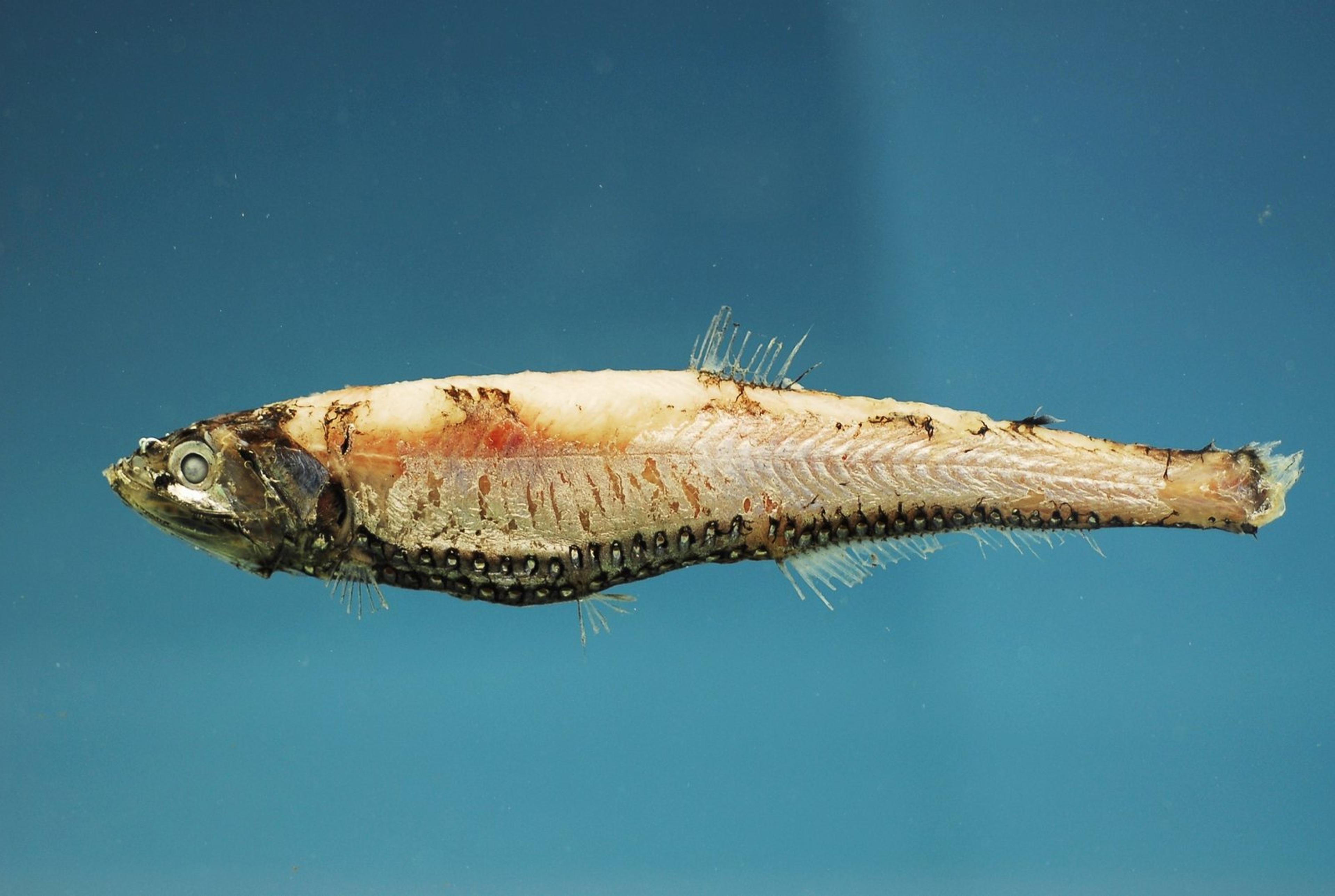
Photo: Large-scaled lanternfish (Neoscopelus macrolepidotus), Brandi Noble / NOAA Fisheries Collection. Resized and lightly tone-adjusted. Photo licensed CC BY 2.0.