FAU lands $1.2 million Palm Beach grant for youth counseling program
Key Takeaways
- •The Children’s Services Council awarded FAU $1.2 million for a three-year youth mental-health initiative.
- •OWLS-FLY plans free counseling and family support for children ages 6 to 17, with half its focus on youth with intellectual and developmental disabilities, siblings and caregivers.
- •The program also expects to train eight to 12 graduate counseling students each year; FAU has not published a service start date or intake process.
Florida Atlantic University says it has received a $1.2 million grant from the Children’s Services Council of Palm Beach County for a three-year effort to provide free, family-centered mental-health services to local children ages 6 to 17 and their families. FAU’s Oct. 16 announcement describes the initiative as both a counseling program and a training pipeline for future clinicians.
OWLS-FLY, short for Opportunity, Wellness, Leadership & Strength with Families Leading Youth, is based in FAU’s Department of Counselor Education. The planned services include individual counseling for children, family therapy, parent and co-parenting groups, and other support, delivered in person or through telehealth. FAU’s announcement does not give a service start date or intake instructions, so the grant announcement should not be read as confirmation that enrollment is open.
The program is designed to prioritize underserved families. FAU says half of its focus will be on young people with intellectual and developmental disabilities, their siblings and caregivers. Other stated priorities include low-income households, families in areas with shortages of mental-health professionals, children with significant exposure to adverse childhood experiences, autistic youth and referrals through community partners. The university has not identified those partners or explained how referrals will work.
That referral network will matter to whether the planned services reach families who face barriers to care. FAU says the initiative will combine a university-based counseling clinic with community partnerships, but its public announcement does not spell out clinic hours, eligibility steps or the first date families can seek care. Those are practical details families and local providers will need as the program moves from a grant announcement into operation.
The plan also connects service delivery with counselor education. Each year, eight to 12 advanced graduate counseling students are expected to complete a specialized four-course sequence and gain supervised clinical experience. FAU says students pursuing education specialist degrees and postdoctoral scholars will deliver services with instruction and close supervision from licensed faculty and clinicians.
That structure gives the three-year initiative two intended outputs: direct support for children and families, and more counselors trained to work with young people with disabilities and their caregivers. FAU has not published a projected number of clients or a target for how many families the grant will serve. Those measures will help show how the program’s reach compares with the training it provides.
Leadership roles are divided across the program. Professor Kelly Emelianchik-Key, identified by FAU as principal investigator, will oversee the program, curriculum and clinical quality. Assistant Professor Alexander M. Fields, the co-principal investigator, will lead research and evaluation, with particular attention to outcomes for youth with intellectual and developmental disabilities. FAU postdoctoral researchers Christina Ladd and Rotem Moshe are expected to support clinical instruction, clinic operations, client data management and outcome assessment.
The grant announcement follows an earlier funding step. In its May 29 update, the Children’s Services Council said its board had approved FAU among four youth mental-health providers for contract negotiations. That notice described an initial investment of more than $3.6 million across 14 youth-development programs for 15 months. It was a council-wide figure, not the amount of FAU’s OWLS-FLY award.
FAU’s October announcement identifies the specific $1.2 million award and the three-year program it will support. The next useful public milestones are the service launch, referral process and any further information on participating community organizations. Until those details are released, families can understand what the program intends to offer without assuming that services are already available.
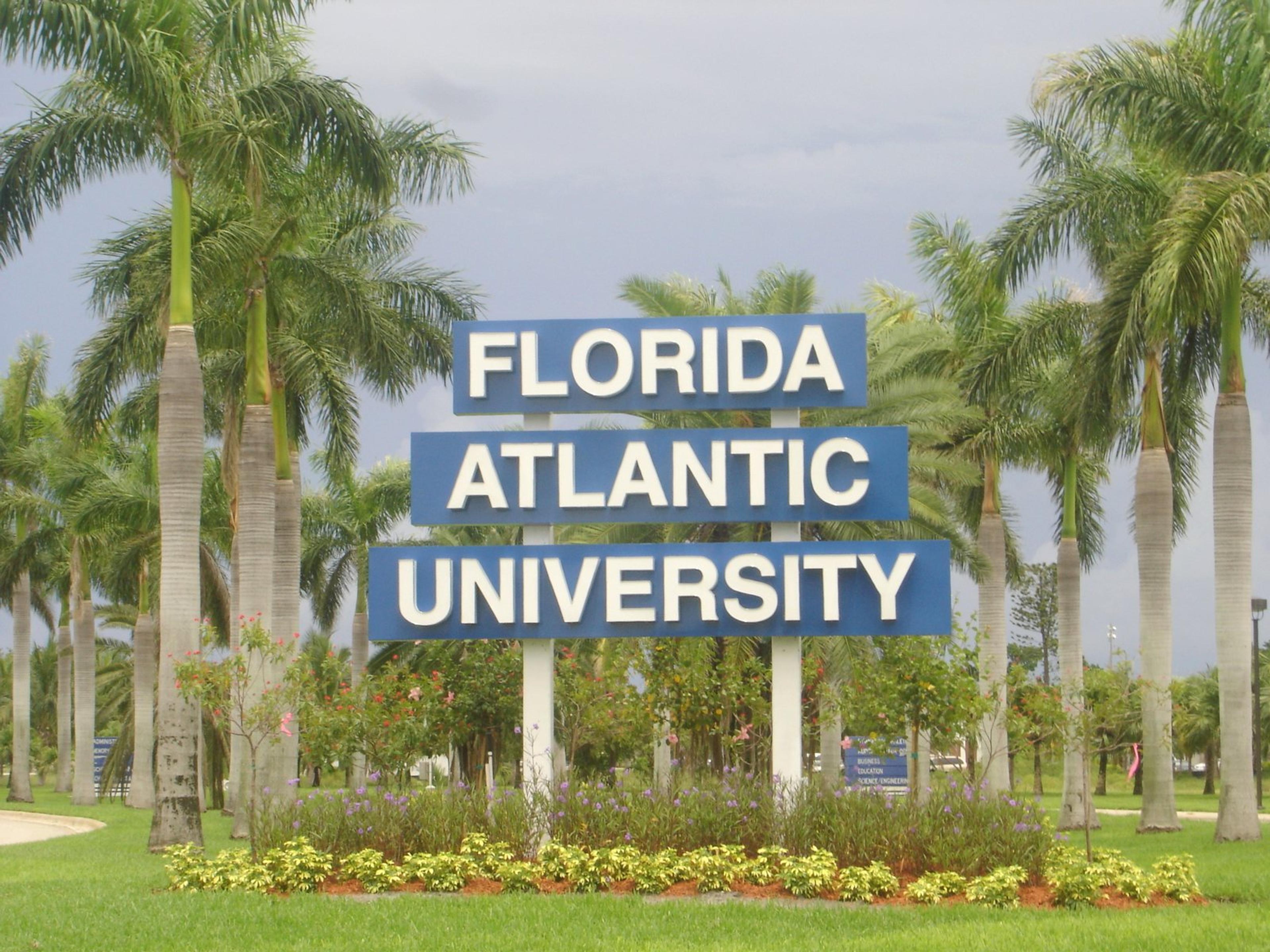
Photo: KnightLago, FAU Sign NW 20th St / Wikimedia Commons. CC BY-SA 3.0. Color adjusted by 22Miami. The edited photo retains this license.