Beneath Miami’s Boom
Key Takeaways
- •Miami-Dade’s DRIP policy (adopted September 2024) lets the Water and Sewer Department coordinate shared pipe upgrades so the first developer isn’t left financing capacity that later projects also use.
- •The public record shows the policy moving into engineering and procurement — but not yet how much time it saved, what developers ultimately paid, or how many buildings it enabled.
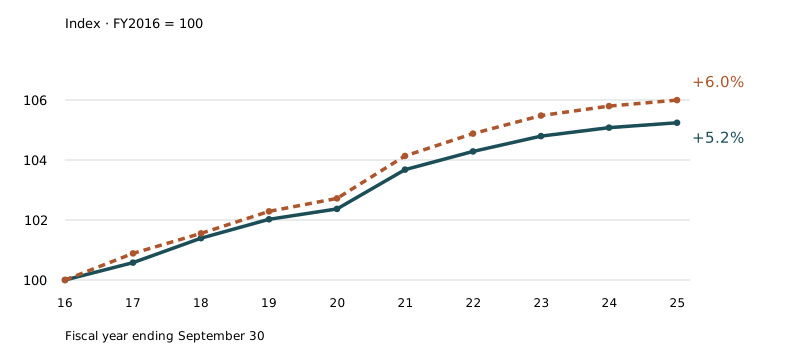
- •Across FY2016–FY2025, retail water customers rose 5.2% and wastewater customers 6.0% — systemwide context, not a map of where capacity is actually available.
- •Three dollar figures ($5m annual allocation, $40m program amount discussed, $637.6m utility-wide capital spend) describe different things and are not additive.
- •Brickell faced an earlier version of the same financing question in 2012–2014, showing the coordination problem predates DRIP.
Who pays for the water and sewer infrastructure that makes new development possible?
The work at street level
The bid called for about 331 feet of 12-inch water main near Biscayne Boulevard and Northeast 18th Street. Along with the pipe came a less photogenic list: excavation, connections to existing mains, disinfection, traffic control and the replacement of pavement and sidewalks disturbed by the work. Miami-Dade County scheduled the bid opening for March 11, 2025.1
In a city accustomed to measuring development in floors and square feet, a procurement notice offers another unit of progress. Before a building can take its place in the neighborhood, the public system serving it has to accommodate what happens inside: water drawn, wastewater discharged and demand placed on infrastructure shared with other properties.
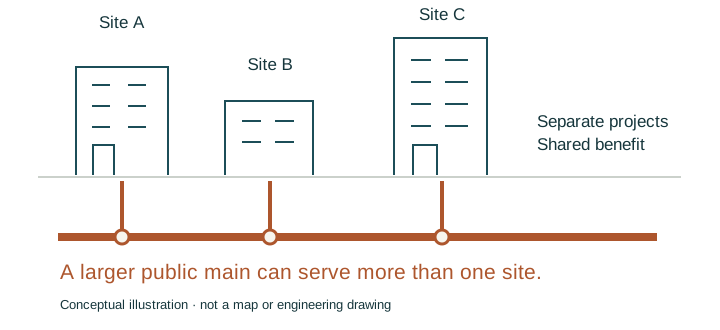
The solicitation carried the name of the Development Required Infrastructure Policy, or DRIP. Adopted in September 2024, the policy addresses a practical problem in Miami’s growth: the first developer to need a larger public pipe may have to finance an improvement that later developments will also use. The county is trying to coordinate some of that work itself and collect a share of the cost from the properties that benefit.2
That shift deserves attention because it connects two decisions often discussed separately: where Miami can accommodate more development, and how the infrastructure serving that development gets delivered. The public record shows a policy moving into engineering and procurement. It does not yet establish how much time DRIP has saved, how much developers have ultimately paid or how many completed buildings it has enabled.
The cost of going first
Imagine two development sites using the same local sewer. If the first project requires a capacity upgrade, that developer can face a bill for infrastructure sized to serve more than its own property. Later projects may contribute when they connect. Even when a reimbursement mechanism exists, the first developer must arrange the work and carry the initial expenditure. This is an illustration of the timing problem described in the county’s legislation, not a reconstruction of an identified private deal.2
DRIP gives the Water and Sewer Department, known as WASD, a route to organize qualifying upgrades across developments. Commissioner Raquel A. Regalado was the resolution’s prime sponsor. The adopted rules cover certain existing local mains under 24 inches, exclude private laterals and extensions, and contemplate at least two developments meeting the specified fire-flow or wastewater-demand criteria. Benefiting properties are to contribute proportionately to the capacity increase.2
The practical change is in who organizes a shared improvement and when money changes hands. Bringing that work into a public program may allow the utility to plan beyond a single parcel. It also makes the utility’s own delivery schedule consequential for participating developers. The potential benefit depends on design, procurement and construction keeping pace with the projects they are intended to serve.
A February 26, 2025 implementation memorandum, issued under Mayor Daniella Levine Cava, identified Wynwood, Midtown, Edgewater, Brickell and Downtown as initial priority areas. It described three developments that had expressed interest and had preliminary meetings with WASD. Interest is an early implementation milestone; the memorandum does not establish three signed agreements or three completed upgrades.3
For wastewater improvements, the memorandum proposed allocating cost according to a development’s calculated average daily flow relative to the extra flow capacity created by an upgrade. That approach makes engineering assumptions financially important. How much capacity an improvement adds, which properties benefit and what demand is assigned to each development affect the resulting contribution. Those inputs would be valuable additions to a public project record.3
How the policy works
Coordinating the improvement beyond one parcel
- 01
Identify the local need
WASD uses hydraulic modeling to prioritize where additional capacity can support development.
- 02
Coordinate qualifying upgrades
The department may undertake eligible shared-main work through its design and construction procurement.
- 03
Allocate the capacity cost
Benefiting properties are charged a proportional share of the cost of increased capacity.
Capacity has an address
The priority neighborhoods should be read as a dated planning assessment. They are not a finding that every parcel in those neighborhoods faces the same constraint. Nor does a countywide total establish whether a particular development can connect. The county’s sewer-capacity certification process exists to examine the additional demand associated with a specific proposal.3,4
Miami-Dade’s public guidance says construction or a change of use that increases wastewater discharge requires a certification letter. Its examples range from a new house to extra restaurant seats. The implication for a business owner is immediate: utility capacity can matter before the project reaches the scale of a tower. The guidance also allows an applicant to seek certification before submitting building plans.4
At the scale of the utility, the longer trend is measured. WASD’s fiscal 2025 annual report records 441,059 retail water customers at the end of fiscal 2016 and 464,176 at the end of fiscal 2025, an increase of 5.2 percent. Retail wastewater customers rose from 357,882 to 379,342, or 6.0 percent. These are customer counts, not counts of residents, apartments or newly built properties.5
Those systemwide figures and the neighborhood priorities answer different questions. A relatively gradual increase across a large service area can coexist with concentrated demand on a particular part of the network. The customer series cannot identify where capacity is available, or tell us how much of the change came from new construction. It provides context for the scale of the utility, while the project-level engineering determines what a location needs.
Ten years of utility records
A larger customer base, measured across the system
View all ten years and download the data
| FY | Water | Wastewater |
|---|---|---|
| 2016 | 441,059 | 357,882 |
| 2017 | 443,615 | 361,055 |
| 2018 | 447,209 | 363,444 |
| 2019 | 449,985 | 366,069 |
| 2020 | 451,509 | 367,618 |
| 2021 | 457,286 | 372,681 |
| 2022 | 459,962 | 375,345 |
| 2023 | 462,214 | 377,496 |
| 2024 | 463,459 | 378,626 |
| 2025 | 464,176 | 379,342 |
Brickell had an earlier version of the question
The connection between development and shared sewer investment predates DRIP. Research notes prepared for a January 2016 county committee meeting describe a special sewer construction connection charge approved in 2012 for new or increased usage in Brickell Basin II. The area was bounded by the Miami River, Interstate 95, Southwest 21st Street and Biscayne Bay.6
The same record describes a $21,976,500 construction contract awarded in February 2014 to Poole & Kent Company of Florida for Master Pump Station No. 3. The stated purpose included serving increased use in existing buildings, new construction and the Brickell City Centre development. That figure is the original total contract award reported in the notes, not a verified final project cost.6
The notes also document a proposed change order: a $500,000 reduction in the base contract and a 254-day extension after a dispute over delays. The useful lesson is the amount of coordination behind a capacity improvement. Equipment, power, controls and construction sequencing all appear in the record. A proposed completion date in a committee document cannot, by itself, establish when service actually began.6
Brickell’s earlier arrangement and DRIP belong to different moments and have different rules. Together, they show the persistence of the underlying financing question. Shared infrastructure has to be built on a schedule; development arrives through separate owners, designs and investment decisions. The cost-sharing mechanism is one way of connecting those timelines.
The documentary timeline
Shared infrastructure, successive approaches
- 2012
A Brickell cost-sharing mechanism
A special sewer construction connection charge is approved for new or increased usage in Brickell Basin II.6
- 2014
Investment in shared capacity
County awards the Master Pump Station No. 3 contract for Brickell; the 2016 record reports the original award.6
- 2024
DRIP is adopted
September 17: the county establishes a route to coordinate qualifying local infrastructure upgrades.2
- 2025
Priority areas and a street-level project
The February memorandum names five areas; the Biscayne Boulevard solicitation schedules a March bid opening.3
- 2026
Engineering procurement advances
The August report records an approved recommendation for two PSAs, with BCC ratification still pending.7
Following the policy into procurement
The Biscayne Boulevard solicitation supplies a concrete view of what implementation can involve. Its scope combines water-main work with replacement of gravity sewer pipe, new manholes and the relocation of existing infrastructure where necessary. It requires permits and a traffic-management plan. Street restoration is part of the job. The notice records the work the county was seeking to buy; it does not establish when those improvements entered service.1
A second record traces the engineering capacity behind the program. WASD’s August 2026 transparency report lists a July 30 approval of a contract award recommendation for DRIP-related engineering services to CHA Consulting, Inc. and Kimley-Horn and Associates, Inc. The accompanying schedule describes two non-exclusive professional services agreements at $2 million each. It marks County Commission ratification as pending.7,8
For a developer waiting on service, engineering procurement is one step toward an improvement becoming usable. Designers still have to produce the plans on which subsequent project delivery depends. The two agreements describe resources intended for that work. Their stated amounts do not measure construction completed, and the August record leaves ratification pending.
The early DRIP records also span a change in utility leadership. Jay Fink became WASD director on June 2, 2025, according to his county biography. Amanda Kinnick, identified as interim director in the February 2025 implementation memorandum, subsequently became assistant director of utility engineering, the role listed in NACWA’s 2026 conference biography.3,9,10
For readers following the program, the next useful milestones are specific: an executed agreement, a construction notice to proceed, acceptance of completed work and a record of the capacity made available. These would turn the policy’s intended benefits into results that can be evaluated. The documents reviewed here do not provide a complete, reconciled DRIP project register with all of those milestones.
Three numbers that describe different things
The financial record needs the same care. The adopted DRIP resolution directed a $5 million allocation for fiscal 2024–25 and the inclusion of $5 million in the next proposed budget and subsequent budgets. Developer contributions were to replenish the annual allocation. That establishes the policy’s funding direction; it is not an expenditure statement.2
The February 2025 memorandum also discusses $40 million for the program, with annual expenditure capped at $5 million. Its executive summary describes the larger amount as allocated, while its detailed funding section recommends that allocation. The reviewed records do not reconcile that wording or establish $40 million in expenditure.3
Then there is the scale of the wider utility. WASD reported preliminary fiscal-year-to-date capital expenditures of $637.6 million as of August 26, 2026. That total spans its capital program. It is not a DRIP total, and it is not a completed fiscal-year result. The report warns that reporting deadlines and month-end closing can produce differences in cumulative figures.11
Treating these amounts as interchangeable would obscure the story. An annual policy allocation, a proposed program envelope and utility-wide expenditure each describe a different commitment. For a reader trying to assess delivery, the useful comparison is between the budget, payments and completed work for the same scope and period.
Federal finance adds another distinction. An EPA fact sheet records a $424.2 million WIFIA loan for North and Central District wastewater treatment projects associated with Florida’s ocean-outfall requirements. The work included treatment improvements and pumping facilities. EPA estimated $79 million in financing savings. This is a separate program context: the loan is repayable financing, and the savings figure is an estimate rather than a reported operating result.12
Reading the financial record
The amount is only half the information
$5m
Annual funding direction
DRIP · Resolution R-821-24
Directed for FY2024–25, with inclusion in the next proposed budget and subsequent budgets. Developer receipts replenish the allocation.
Adopted resolution, §6 ↗$40m
Program amount discussed
DRIP · February 26, 2025 memorandum
Described as allocated in the summary and recommended in the detailed funding section; annual expenditure capped at $5m.
Memorandum, pp. 1 and 4 ↗$637.6m
Preliminary capital expenditure
All WASD · FYTD to August 26, 2026
Reported across the utility’s capital program. Not a DRIP expenditure total or a final fiscal-year result.
August Exhibit B ↗Making room while maintaining the system
Local development upgrades operate alongside a much larger obligation to maintain and improve existing service. WASD’s capital records include work under a federal consent decree and projects addressing ocean-outfall requirements. These programs cannot be combined into one measure of growth capacity. They have distinct scopes, regulatory purposes and reporting arrangements.12,13
The consent-decree report for the second quarter of 2026 continues to track construction and compliance work. The August transparency summary also carries a consent-decree schedule whose underlying data month is July 2026. A publication month, a data cutoff and a project completion date can therefore differ even within the same reporting package.7,13
For residents, the practical interest extends beyond the ability to connect a new building. It includes dependable service, the timing of street work and how costs are allocated across those who benefit. For developers, a coordinated program offers a framework for planning, but the decisive information remains local: the required improvement, the contribution and the delivery date.
The records support a constructive assessment of DRIP’s purpose. Miami-Dade has recognized a recurring coordination problem and established a mechanism to address it. Judging its performance will require project outcomes as well as policy documents. Useful measures would include elapsed time from agreement to available service, initial and final costs, developer receipts and the additional capacity placed into operation.
The next chapter of this story can be reported at the scale of a street. Once a shared main is accepted into service, it becomes possible to connect the public expenditure, the participating developments and the capacity delivered. That is where the promise of coordinated investment can be tested, a few hundred feet of pipe at a time.
People named in the records
Policy and implementation
These links identify officials discussed in the article. Inclusion reflects their documented roles; none was interviewed for this report.
- 01
- 02
- 03
Amanda Kinnick, P.E.
Interim director in the February 2025 DRIP memorandum; subsequently identified as assistant director of utility engineering in NACWA’s 2026 biography.
Roles are attributed to the dated records. Fink’s personal profile URL is linked directly from NACWA’s speaker document; the other profiles were matched through public professional listings. Profiles may require a LinkedIn sign-in.
How this was reported
This article is a document-led analysis of public legislation, procurement notices, financial reports and professional biographies reviewed through October 2, 2026. No interviews or site visits were conducted. Historical customer figures were transcribed from one consistent ten-year table in WASD’s fiscal 2025 annual report. Percentage changes are 22Miami calculations, rounded to one decimal place. Procurement and spending descriptions retain their source dates and qualifications. AI assisted the document research and preparation of this article; the underlying records are linked for verification.
Customer data are available as CSV and JSON with definitions. The figures describe WASD’s retail customer base, not the population or housing stock of the City of Miami.
Documents and sources
- 1.Miami-Dade procurement notice P20341Bid opening March 11, 2025; scope sections 1 and 2. Procurement evidence only.
- 2.Resolution R-821-24, legislative file 241791Adopted September 17, 2024; recitals and sections 3–6. Final adopted text, not an earlier proposal.
- 3.DRIP implementation progress memorandumFebruary 26, 2025; agenda March 18, 2025. PDF pp. 1–4, especially funding discussion on pp. 1 and 4.
- 4.Miami-Dade Sewer Capacity Certification guidancePublic guidance, accessed October 2, 2026; introductory explanation and examples.
- 5.WASD Annual Comprehensive Financial Report, fiscal 2025Retail Customer Statistics, printed p. 97 / PDF p. 99. One publication vintage for all ten fiscal years.
- 6.Metropolitan Services Committee research notesJanuary 13, 2016; item 3F, printed p. 13 / PDF p. 14. Includes historical award and proposed change order.
- 7.WASD August 2026 transparency summaryPDF p. 1: E25WS04; p. 2: preliminary expenditure; p. 3: underlying consent-decree data month.
- 8.WASD August 2026 procurement schedule, Exhibit APDF p. 1, entry 210, E25WS04. Two $2 million PSAs; BCC ratification pending in this snapshot.
- 9.Official biography of WASD director Jay FinkAppointment effective June 2, 2025. Accessed October 2, 2026.
- 10.NACWA 2026 Winter Conference speaker profilesPDF p. 12: Jay Fink; p. 18: Amanda Kinnick. Professional biographies, not interviews conducted for this article.
- 11.WASD August 2026 capital expenditure report, Exhibit BPDF pp. 1–2. Preliminary as of August 26, 2026. Utility-wide fiscal-year-to-date spending.
- 12.EPA WIFIA fact sheet for Miami-Dade ocean-outfall projects2021 fact sheet, PDF p. 1. $424.2 million loan; $79 million estimated financing savings.
- 13.Miami-Dade consent-decree quarterly report, Q2 2026PDF pp. 6–13, reporting period April–June 2026. Ongoing program and project/compliance reporting; no DRIP outcome metric.
Reuse & citation
22Miami Editorial, Beneath Miami’s Boom. Research through October 2, 2026. Customer figures: Miami-Dade Water and Sewer Department, FY2025 annual report, p. 97; percentage changes calculated by 22Miami.
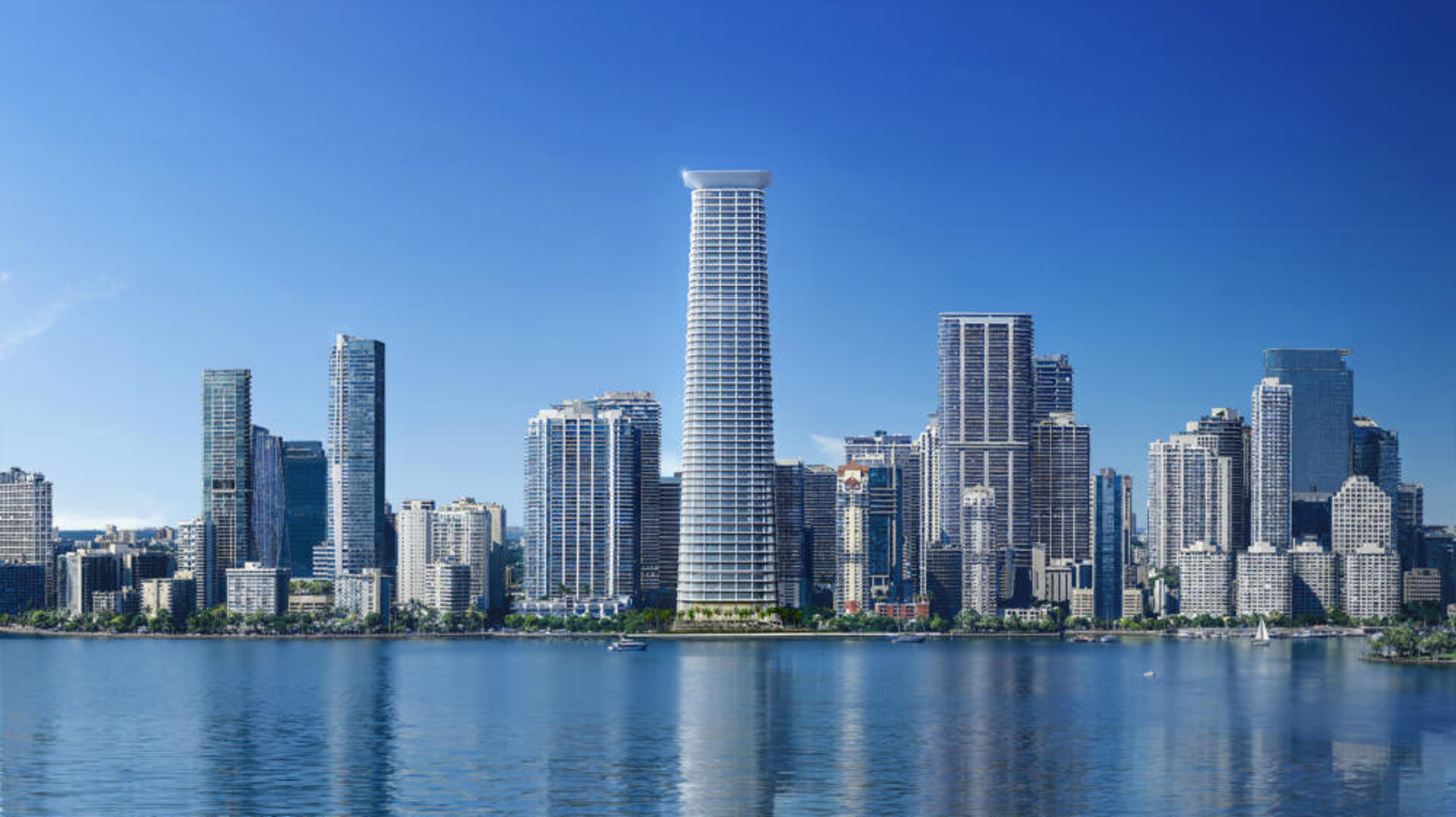
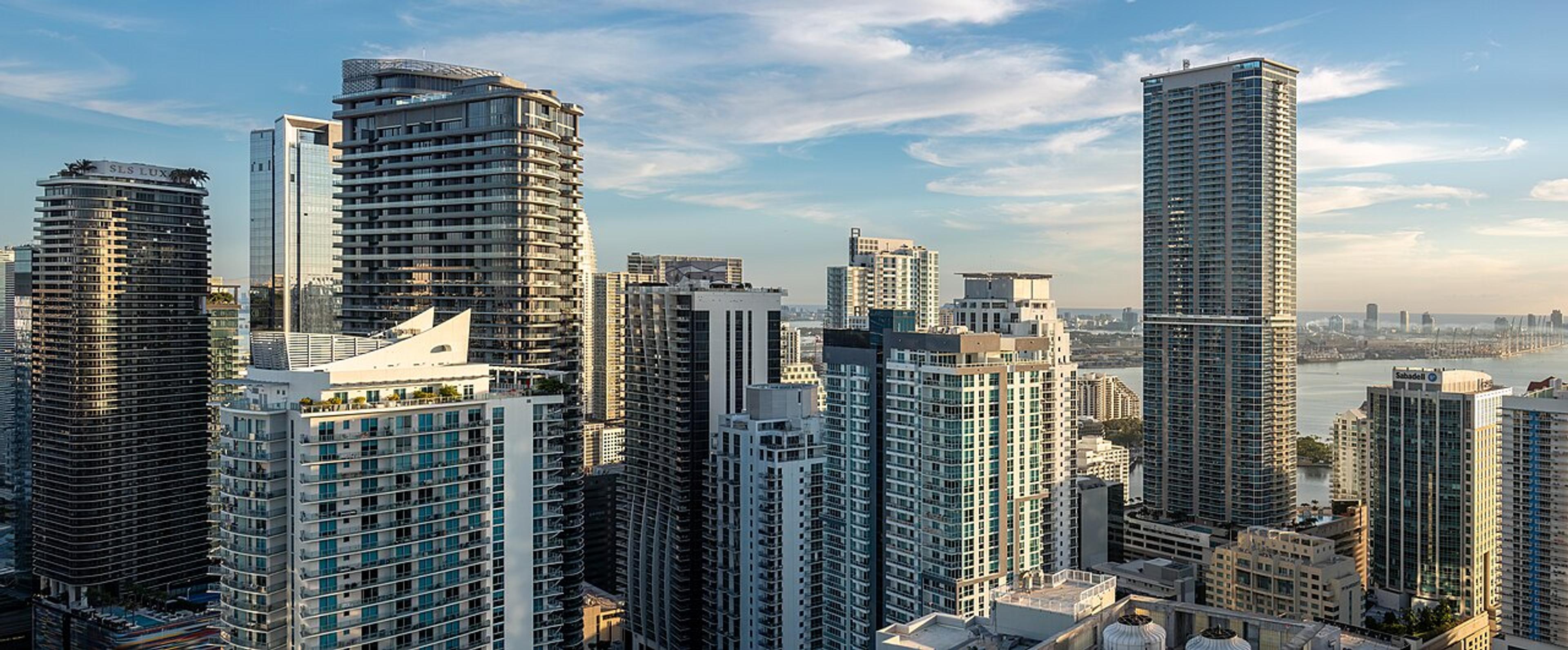
The photographic credit and license apply separately to the Brickell image. The data do not measure neighborhood capacity or housing-unit growth.